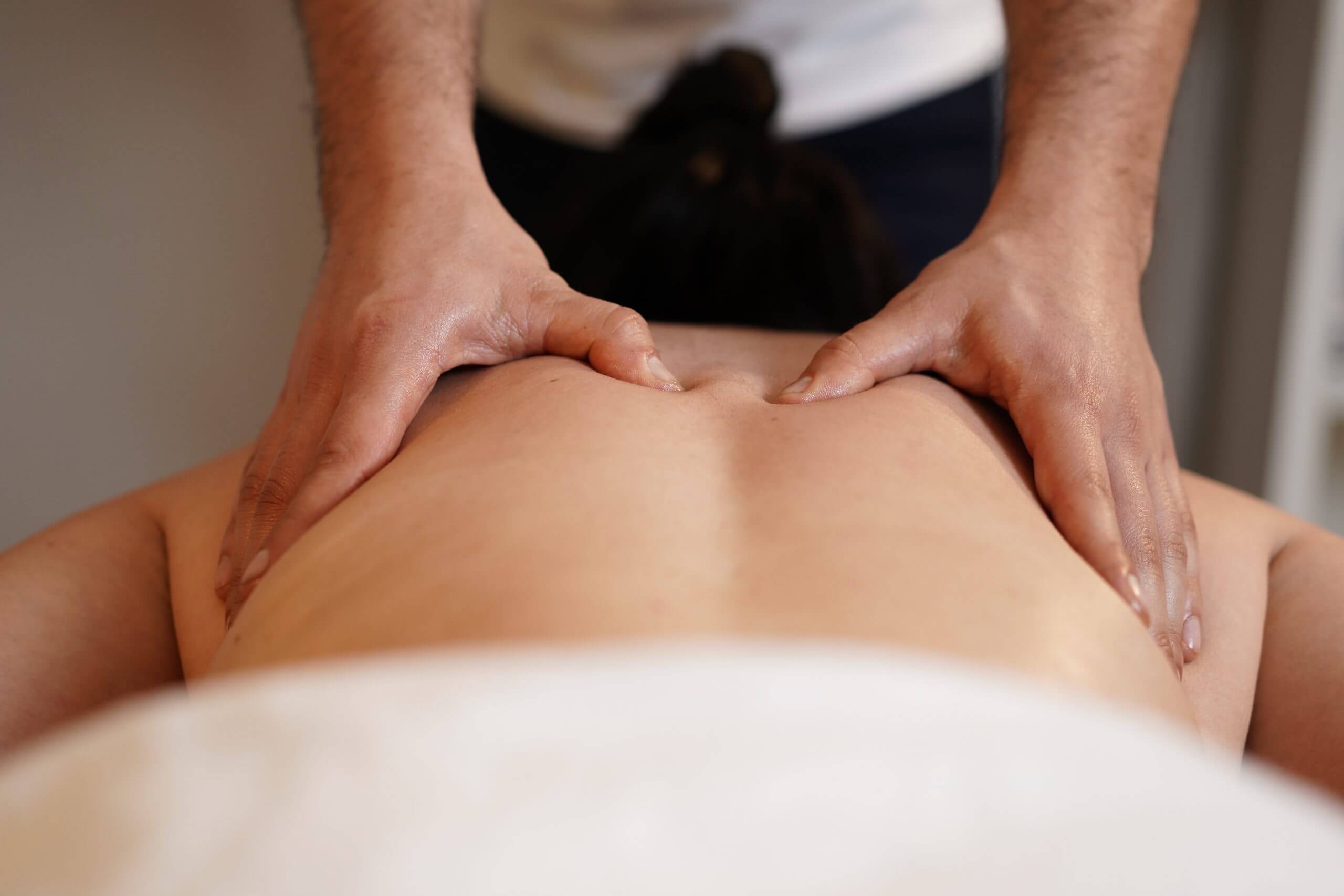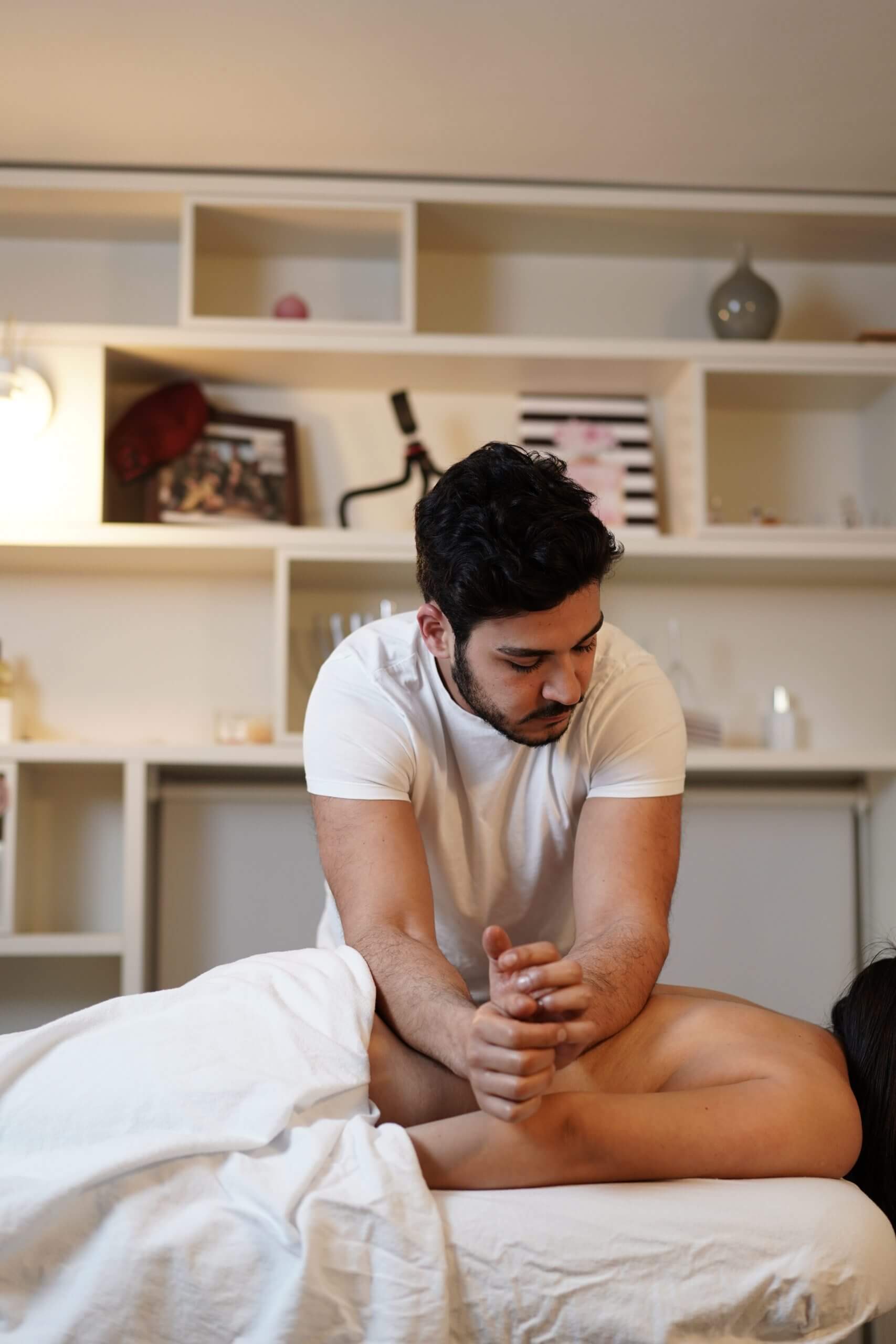
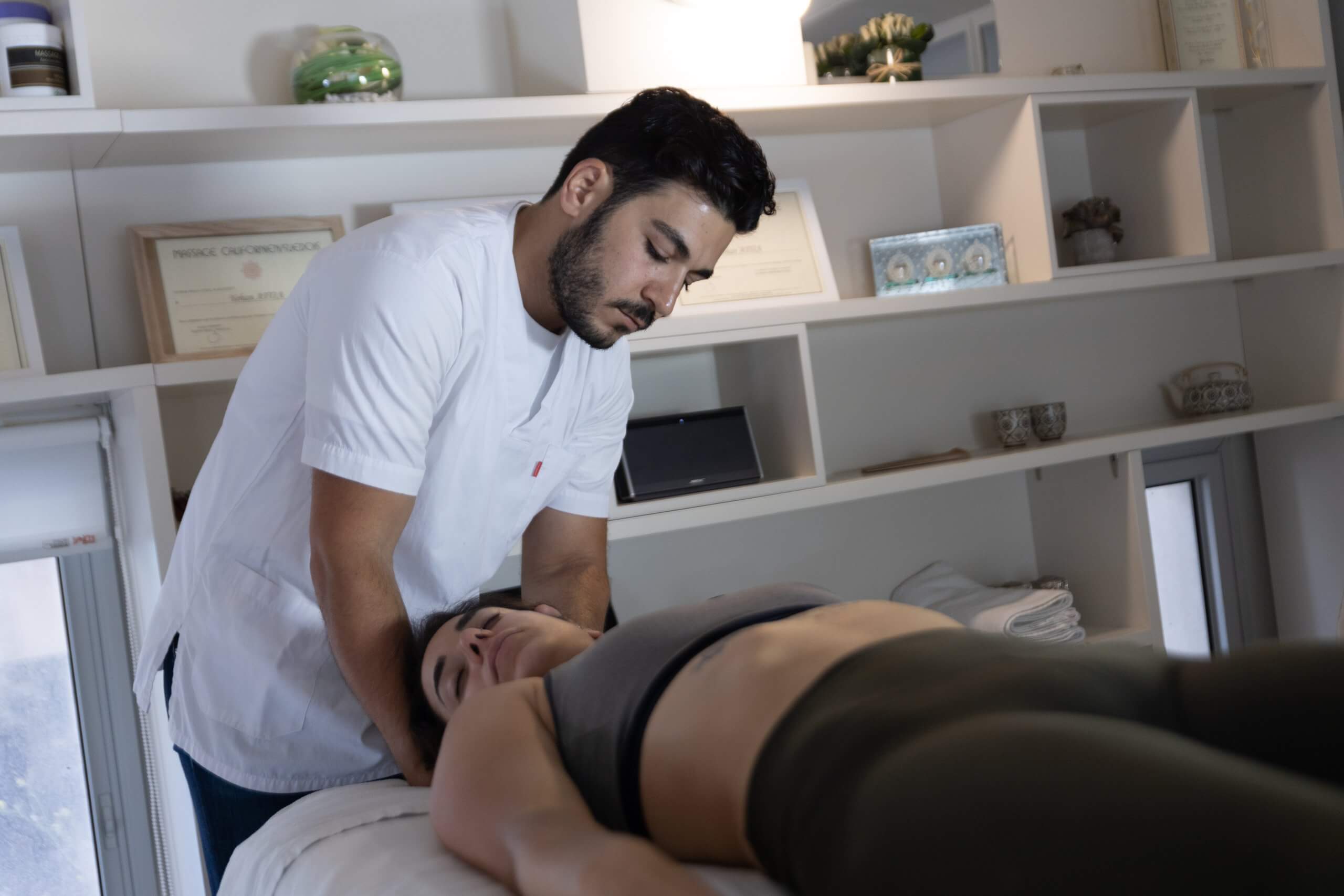
Soft tissue manipulation is the treatment I was trained in first and the one that shaped how I work. Instead of pressing into a muscle, I take it through its range: stretching it, mobilising it, working the fascia that wraps it, joint by joint and muscle by muscle.
It is the session athletes come back for, but it is not reserved for them. If you have lost range somewhere, if a movement that used to be easy now catches, this is the treatment that addresses it.
What it does
- Restores range of motion lost to shortened muscle
- Improves the glide between muscle and fascia
- Prepares the body for, and recovers it from, heavy training
- Addresses pain at its source, not only where it is felt
- Makes the results of a deep tissue session last longer
Who it is for
- Runners, cyclists, climbers, gym regulars
- Anyone whose stretching has stopped working
- Recovery from an injury that healed stiff
- People who sit all day and have lost hip mobility
- Anyone preparing for a race or a physical event
Stretching versus pressing
A shortened muscle and a knotted muscle are two different problems. A knot is local: one spot that will not release, which responds to sustained pressure. A shortened muscle is the whole length of it, held permanently a few centimetres from where it should be, and no amount of pressing fixes that.
Soft tissue manipulation addresses the second. I position the limb, take the muscle to its end range, and work along it while it is under tension. It is more active than a classic massage: you will be moved, and sometimes asked to resist gently.
The fascia, and why it matters
Fascia is the connective sheet that wraps every muscle and links them to each other. When it loses its glide, two muscles that should slide independently start dragging on one another, and the pain shows up somewhere you would not expect: a tight calf pulling on a hamstring, a hip restriction showing up as shoulder pain.
That is why I rarely treat only the painful spot. Where it hurts and where the problem lives are often two different places, and following the chain is most of the work.
What it is good for
Sport is the obvious one: restoring range between training blocks, unlocking a movement pattern that has gone stale, recovering from a heavy period without losing mobility.
Less obvious but just as common: people who sit all day and have lost hip extension without noticing, anyone recovering from an injury that healed in a shortened position, and anyone whose stretching routine has stopped producing results.
Combined with deep tissue
In practice these two often share a session. I use deep tissue pressure to release the specific trigger point, then soft tissue work to give the muscle back the range the knot was stealing.
Releasing a knot without restoring the range usually means it comes back within a fortnight. Doing both in the same hour is what makes the result hold.
How a session goes
- 01A quick movement assessment: what catches, where the range stops, which side is worse.
- 02Warming the area, then muscle by muscle work under tension, with your limb positioned by me.
- 03Checking the range again on the same movement, so you feel the difference before you leave.
- 04Two or three mobility exercises to hold the gain between sessions.
Questions about this treatment
- Is it the same as a sports massage?
- It overlaps. Sports massage is a context, soft tissue manipulation is a technique. I use it for athletes and for people who have never played a sport in their life.
- Do I need to do anything during the session?
- Sometimes. I may ask you to breathe out at a specific moment, or to push gently against my hand. It is light, and I tell you exactly when.
- Will it hurt?
- You will feel a strong stretch rather than a deep ache. It is a different sensation from deep tissue, and most people find it easier to tolerate.
- When should I book it before a race?
- Three to five days before, not the day before. The body needs a little time to settle into a new range.