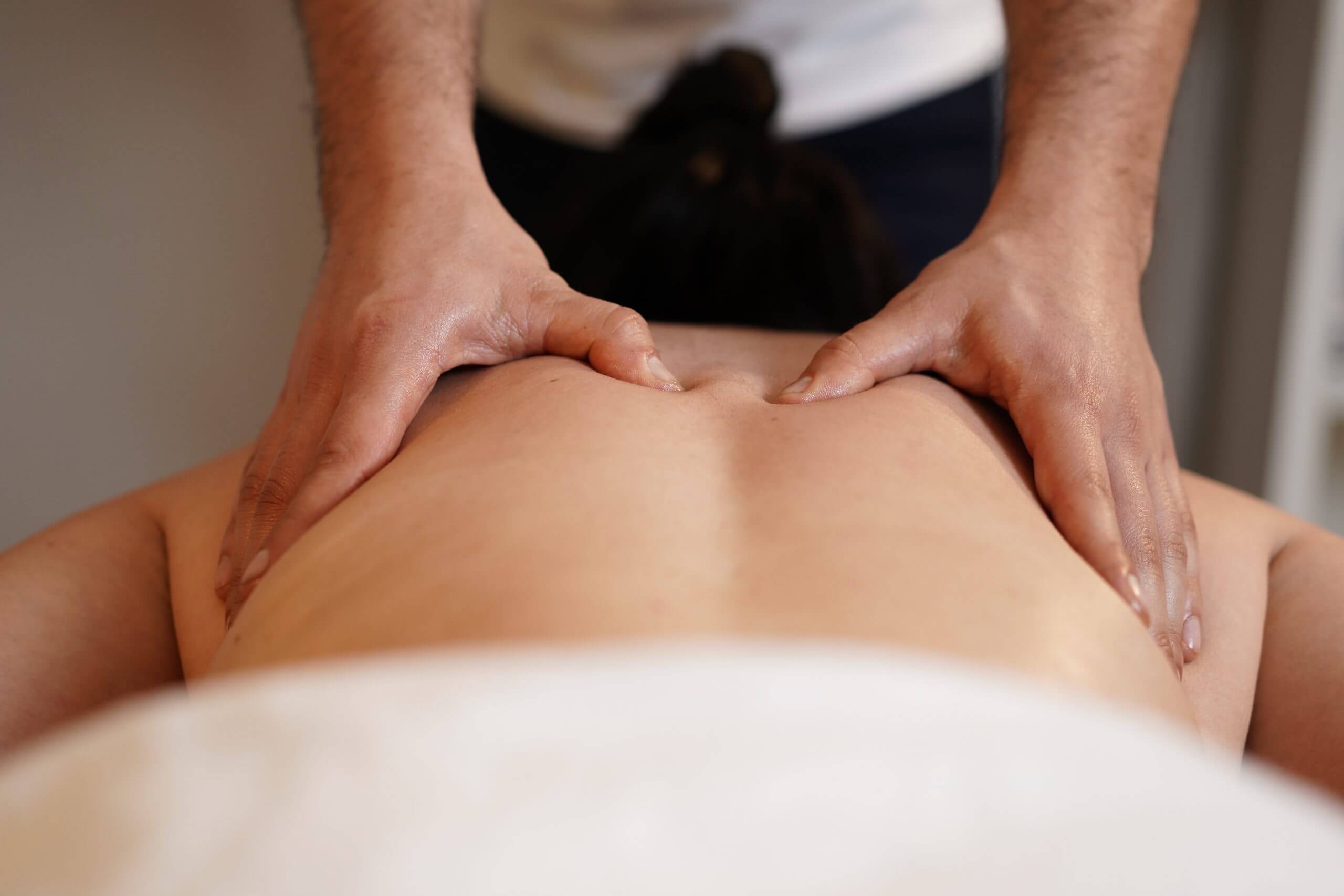

The Swedish massage is the treatment most people picture when they think of massage, and it is where I send anyone who has never been on a table before. Long gliding strokes, slow kneading and light friction, over the whole body, at a pace that lets the nervous system actually let go.
It is a light to moderate pressure treatment. Nothing is forced, nothing should make you brace. If you have been told that massage has to hurt to work, this is the session that proves otherwise.
What it does
- Lowers nervous and muscular tension across the whole body
- Improves blood and lymphatic circulation
- Helps you fall asleep faster and sleep deeper
- Relieves the stiffness of long hours at a desk
- No soreness the next day, unlike deeper work
Who it is for
- Anyone booking their first professional massage
- Desk workers, developers, drivers
- People under prolonged stress or sleeping badly
- Anyone who finds deep tissue work too intense
- Travellers recovering from a long flight
What a Swedish massage actually does
The technique works on two levels at once. Mechanically, the long strokes push venous blood and lymph back towards the heart, which is why your legs feel lighter afterwards. Neurologically, the repetition and the rhythm shift you out of a sympathetic state, the one that keeps your shoulders up around your ears all day.
That second effect is the one clients underestimate. A lot of the tension I find in a first session is not damaged tissue, it is a muscle that has simply never been given the signal to release. Slow, predictable pressure gives it that signal.
The cream, not oil
I work with a natural cream made from chia seeds, the same one used in the better spas in Israel. Cream glides differently from oil: there is more contact, less sliding, and it absorbs into the skin instead of sitting on top of it.
In practice that means you do not leave greasy, you do not need a shower afterwards, and your clothes stay clean. You choose the scent at the start of the session: lemon, lavender, green tea, coconut, or unscented.
60 or 90 minutes
Sixty minutes covers the back, neck, shoulders and legs properly. It is the right length if you have a specific area that gets most of the time, or if this is your first session and you want to see how your body responds.
Ninety minutes covers the whole body without rushing: back, neck, shoulders, arms, legs and feet, with time left to come back to whatever needed more. Most regulars settle on ninety once they have tried both.
Swedish or deep tissue?
Choose Swedish when the goal is to unwind, sleep better, or recover from a stretch of stress. Choose deep tissue when you have a specific, stubborn pain that has been there for weeks.
If you are not sure, book the Swedish. I adapt the pressure as we go, and if a particular area needs more work I can go deeper on that spot inside the same session.
How a session goes
- 01A short conversation: what hurts, what you want from the hour, any medical history I should know.
- 02You undress to your comfort level and lie under a towel. Only the area being worked on is uncovered.
- 03The treatment itself, face down then face up, with the pressure adjusted as we go.
- 04A few minutes to get up slowly, a glass of water, and advice on when to come back.
Questions about this treatment
- Does a Swedish massage hurt?
- No. The pressure stays light to moderate throughout. If anything feels like it is too much, say so and I adjust immediately. You should never be holding your breath.
- Do I have to undress completely?
- No. Most clients keep their underwear on. You are covered by a towel the whole time and only the area I am working on is uncovered.
- Will I be sore tomorrow?
- Very unlikely. Soreness the day after is associated with deep tissue work, not with a Swedish massage. You should wake up feeling lighter, not bruised.
- How often should I come?
- For general upkeep, once a month works well. During a hard period at work or in training, every two weeks for a while makes a bigger difference.